
Sex Offender Checks in Yuma County
The main public channel is the Arizona Department of Public Safety OffenderWatch registry. It supports both name and address searches. The address route can find published offenders within a selected area around a home, school, business, or other place. Yuma County residents can start with a full name when they know the person or with an address, city, state, and ZIP when the question concerns a neighborhood.
The Yuma County Sheriff's Office does not replace the state search. It handles local notification and takes questions about a convicted sex offender living in Yuma County. The two channels work together: DPS publishes eligible registry data, while YCSO is the local compliance contact. Before searching, gather a spelling, approximate age, or exact street address. Small details help separate similar names and prevent a map result from being mistaken for a confirmed identity.
There is also a state-level compliance path through the Arizona DPS Sex Offender Compliance Team. Use DPS for questions about statewide registry administration and YCSO for a local Yuma County concern. Adult Probation has a separate Sex Offender Unit for specialized supervision and treatment of people on probation. That unit's role is supervision, not a public substitute for OffenderWatch. Keeping those roles distinct helps a reader avoid sending the same question to an office that does not own the public record.
Yuma County OffenderWatch Search Fields
OffenderWatch offers more than a single name box. Its area form makes geography central, but a city or ZIP alone may be too broad to answer a street-level question. Enter the most exact address available, then compare map and list views and open the detail record. A name search is better when identity is the starting point.
The Arizona Legislature's registry statute page shows the law behind the DPS internet registry.
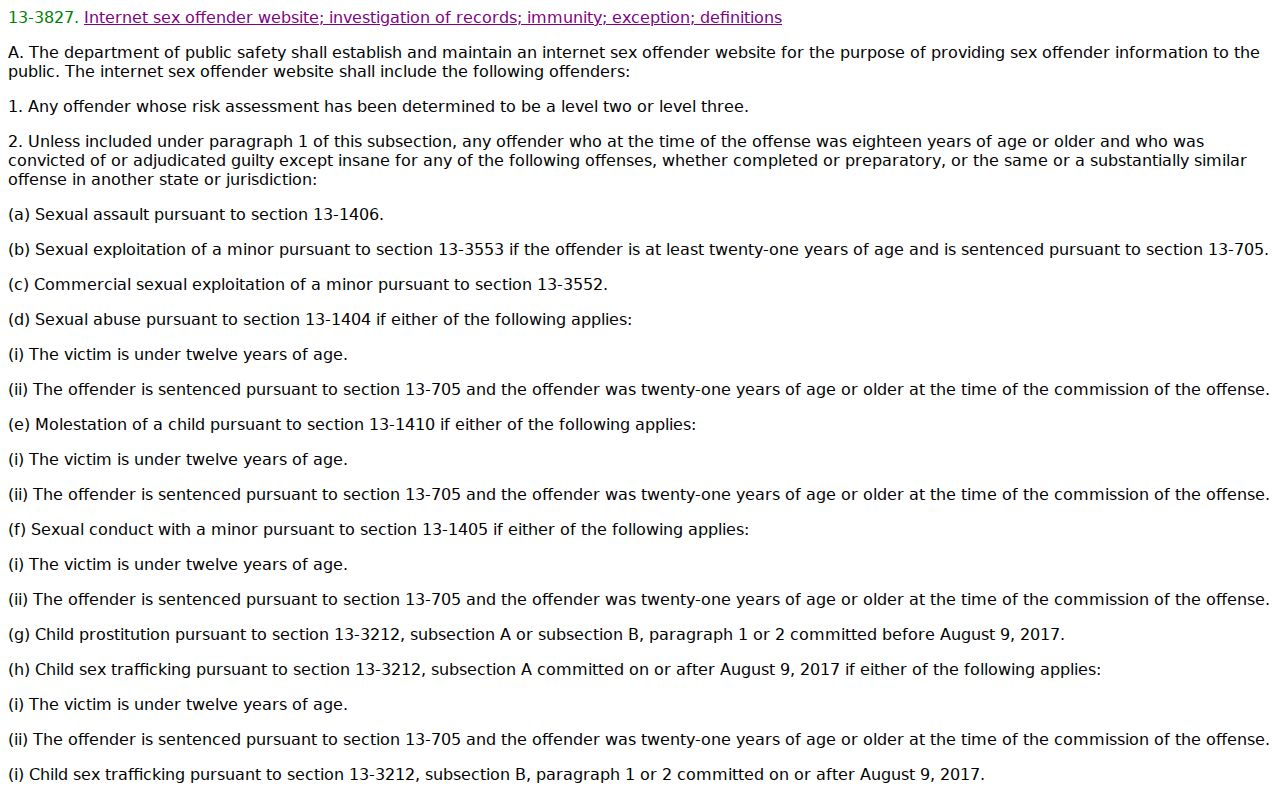
A.R.S. § 13-3827 defines the public profile categories and explains why registry content differs from a full criminal court file.
Use the Clear control before changing from an address query to a name query so old criteria do not narrow the next result set. Then review both the result list and the map. A location pin helps show geography, while the detail page provides the identity fields needed for a careful match. The registry can also show secondary addresses where that option and public record apply.
How to Search the Arizona DPS OffenderWatch Registry
Arizona DPS operates the statewide public search. It includes publishable offenders, not every person ever convicted of a sexual offense. Search conditions, risk classification, and statutory publication rules shape what appears. Use the following sequence for a Yuma County sex offender search, then save the profile details needed to discuss a possible error or compliance concern with the proper agency.
- Open OffenderWatch and read the search notice before proceeding.
- Choose a name search or enter an address, city, state, ZIP, and any useful address-type option.
- Compare the map and list, then use age, photo, and physical description to avoid a false match.
- Open the full profile and read the offense, address, level, and status together.
| Field Label | Type | Required | Notes |
|---|---|---|---|
| Address | Text | Yes for area search | Starting point for radius and geography results. |
| City | Text | Yes for area search | Use Yuma County city names as applicable. |
| State | Dropdown | Yes | Select Arizona for a local search. |
| ZIP / ZIP Plus | Text | ZIP required; plus optional | Five-digit ZIP with optional ZIP+4. |
| Offender Address Type | Control | No | Home or secondary addresses. |
| First and Last Name | Text | No | Used for the separate name-search route. |
| Map / List | View control | No | Compare both views before opening a detail profile. |
Unmappable Yuma County Registry Addresses
A geography search has an important blind spot. OffenderWatch warns that an address which cannot be electronically mapped may not appear in map-based results. That can happen even when a publishable record exists. A blank radius result should therefore be treated as a search result, not as proof that no registrant is tied to the broader Yuma County area.
Switch to the registry's list view and use its path for unmappable addresses. If a person is known, run a name search as well. This check is especially useful for rural or unusual address formats. Comparing both modes is a simple way to reduce false assurance without making assumptions about anyone whose name does not appear.
Inside a Registry Profile
An Arizona public profile is a focused notification record. It helps a Yuma County reader identify the published registrant and understand the basis for notification. It is not a full case docket, investigative report, or statewide criminal-history record. A charge history or case outcome should be verified in the court file rather than inferred from the profile.
| Name and Age | Public identity details authorized by A.R.S. § 13-3827. |
|---|---|
| Photo and Physical Description | Current photograph and traits used to check identity. |
| Registered Address | Published location subject to registry law and mapping limits. |
| Offense | The offense committed, rather than a complete court docket. |
| Notification Level | Risk level when an assessment has been completed and publication is authorized. |
| Compliance or Status | Status information when it is included in the public record. |
The Arizona Legislature's registration law provides the foundation for who must register and how the duty operates.
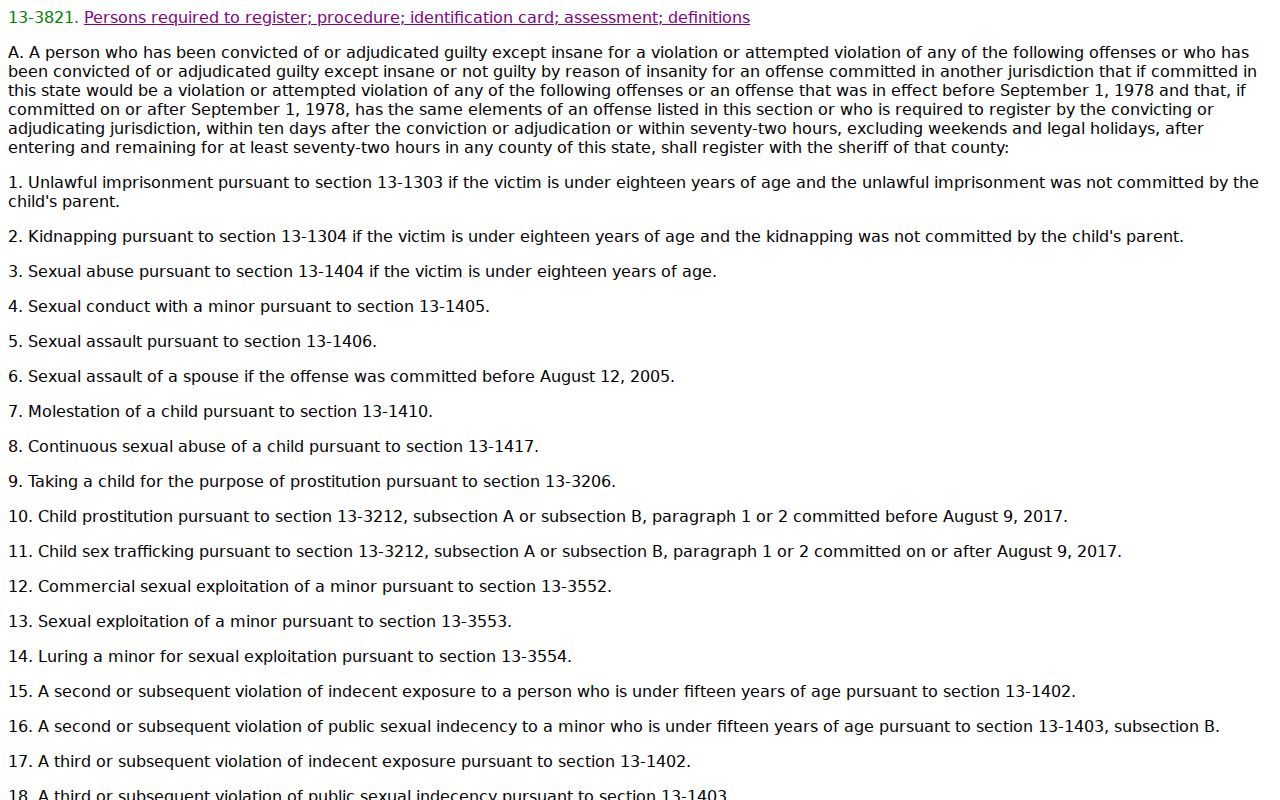
The statute also shows why a public profile is only one view of a broader legal registration duty.
Read the fields as a set. A photograph without the age and physical description may lead to a poor match. An address without the status or date context can be misunderstood. The offense field identifies the published qualifying offense, but it does not reproduce every filing, amendment, plea, or sentencing event from the underlying case. When that detail matters, note the person's identifying information and locate the originating court record through an official court channel.
Yuma County SOCompliance Contact
YCSO is the direct local channel for information about a convicted sex offender who resides in Yuma County. Contact the Records Department at 160 S. 3rd Avenue, Suite B, Yuma, AZ 85364, call (928) 329-2254, fax (928) 539-7891, or email SOCompliance@ycso.yumacountyaz.gov. Use the official channel for a specific compliance concern, and describe the observed issue without confrontation.
The Yuma County Sheriff's notification page connects local residents to that registration and compliance contact.
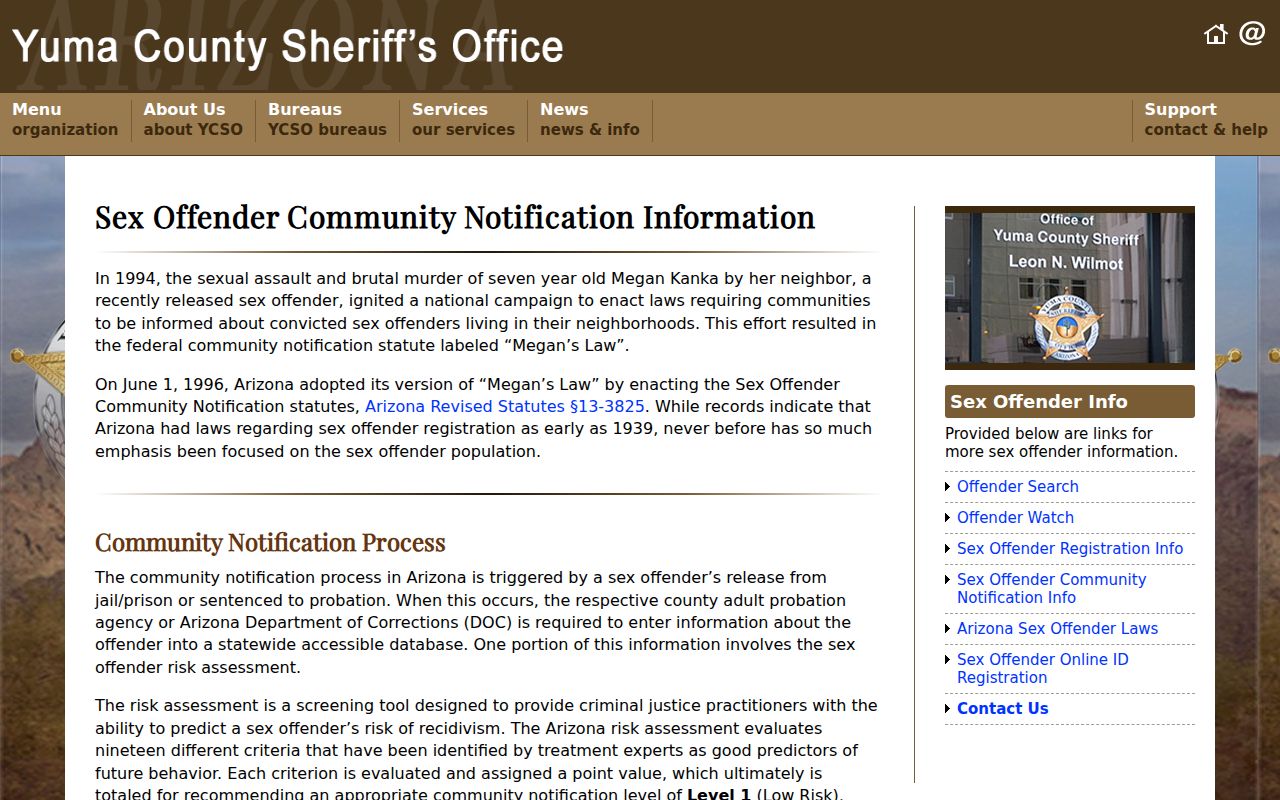
This local route matters when a search result appears stale, a published address raises a factual concern, or more context is needed about Yuma County notification.
Arizona Registration Levels and Requirements
Arizona uses risk levels for community-notification decisions. Level 1 is the lower-risk category, while Levels 2 and 3 receive broader treatment under the notification and internet-publication rules for covered offenders. Registration is generally a lifetime duty unless a statutory termination path applies. The research does not establish a single public verification schedule for every level, so none should be inferred from the risk label alone.
| Level / Category | Duration | Public Handling |
|---|---|---|
| Level 1 | Generally lifetime unless an exception applies | Website inclusion depends on statutory categories and publication rules. |
| Level 2 | Generally lifetime unless an exception applies | Community notification and DPS website publication for covered offenders. |
| Level 3 | Generally lifetime unless an exception applies | Highest-risk notice includes photo, exact address, and status/background summary. |
| Termination exception | Case specific | A.R.S. § 13-3826 permits petitions to terminate in certain cases. |
The Arizona community-notification statute sets out how notice expands for higher-risk classifications.
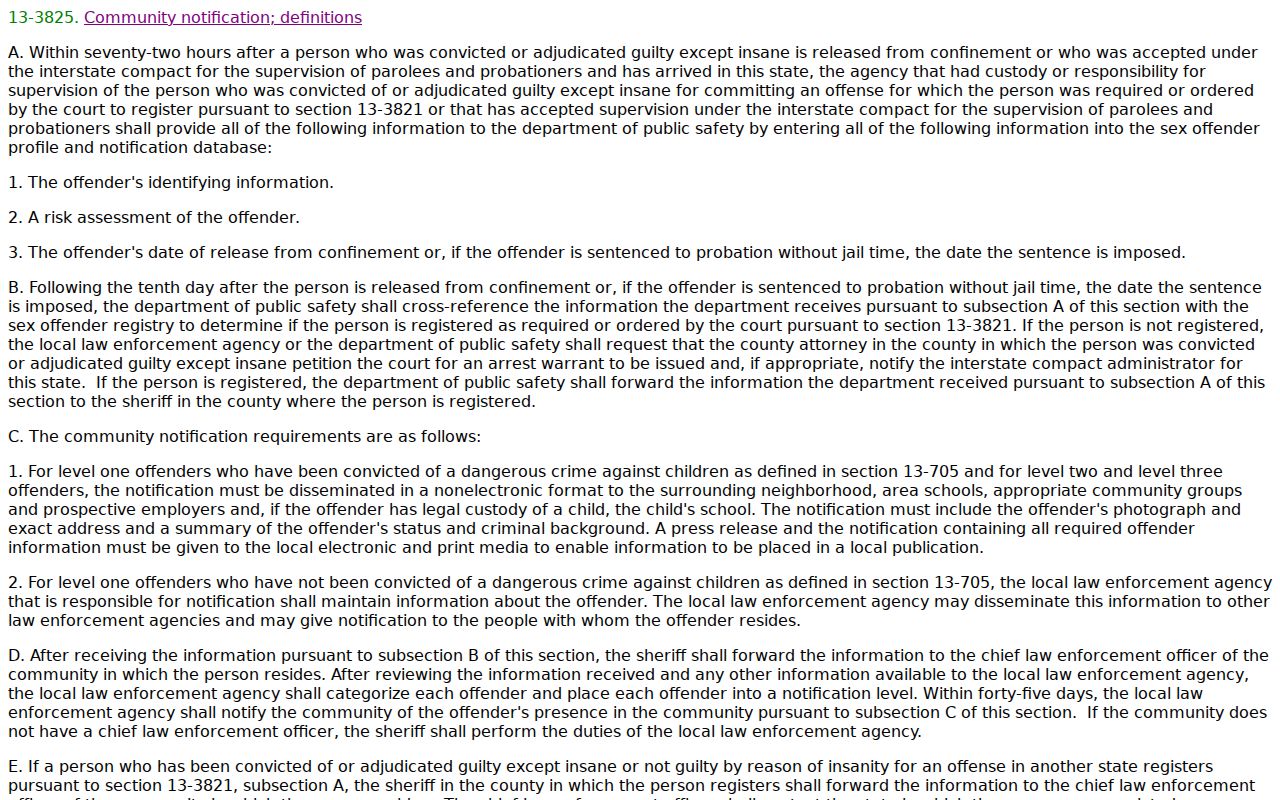
That source is the right place to verify the legal distinction instead of treating all Yuma County profiles as if they carried the same notice rules.
Risk level and public visibility are related but not interchangeable. Level 1 does not mean that every person in that category will be displayed in the same way, because statutory categories also affect publication. Level 3 signals the broadest community-notification treatment described in the research. Duration is also separate from level: the general rule is a lifetime registration duty, with a petition process for certain statutory exceptions rather than an automatic end date shown in this table.
Yuma County's 72-Hour Compliance Rule
The Arizona DPS Sex Offender Compliance FAQ explains a key timing rule: an offender has 72 hours, excluding weekends and legal holidays, to complete a change of address in person on a sex offender registration form. Failure to comply is a Class 4 felony.
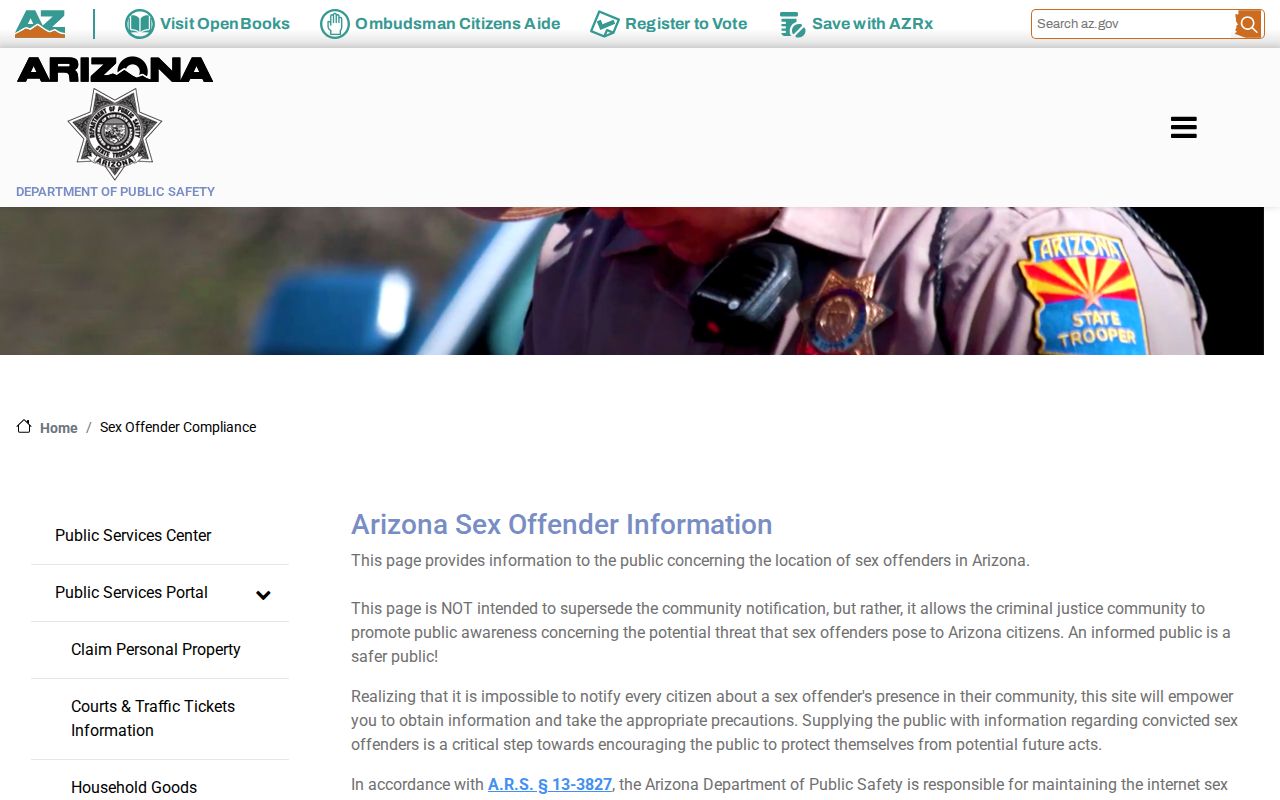
For a Yuma County resident, that rule helps distinguish a possible compliance issue from an assumption based only on a map pin or an old informal address.
NSOPW Beyond Yuma County
A local Arizona search is strongest for an address or person believed to be in Yuma County. The National Sex Offender Public Website adds a cross-state layer when the location is uncertain or recent movement may cross jurisdiction lines. NSOPW accepts first and last name, county, city or town, or as many as five ZIP codes, and it can search participating states, territories, and Indian Country.
The official NSOPW search brings those public registries into one national query.
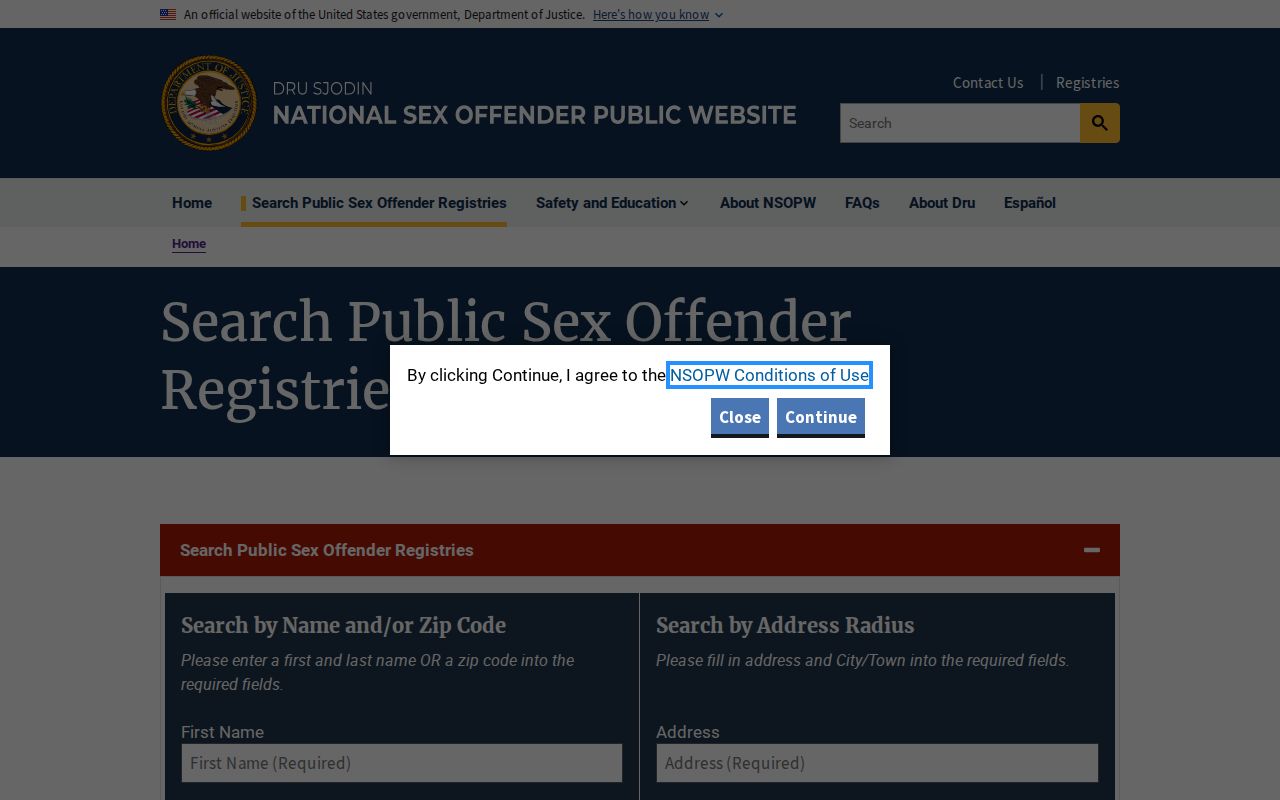
Use NSOPW as a second layer, then return to the source jurisdiction's profile for its current details and rules.
The national tool does not make Arizona's map limits disappear, and it should not be read as a new independent case record. Its value is reach. If a name returns entries in more than one jurisdiction, compare photographs, ages, physical descriptions, and source-registry details before drawing a conclusion. If no national result appears, repeat the query with spelling variants or a ZIP-based search, while remembering that each participating jurisdiction controls what it publishes.
Community Notification and Lawful Use
Yuma County registry information is intended for safety awareness and informed planning. Community notification can include a photograph, exact address, and a summary of status and criminal background for qualifying cases. Read those facts in context, verify them through the official profile, and contact YCSO when a concrete compliance question arises. Do not approach a registrant or household to test an assumption.
The Arizona Legislature's community-notification text is the governing source for the form and scope of qualifying notices. Its rules support public awareness, but they do not authorize private punishment or interference.
Use Registry Data Lawfully: Misusing registry information for harassment, threats, vigilantism, or another offense can be a crime; A.R.S. § 13-3825 authorizes community notification, not private punishment.